To locate reliable Las Cruces landscaping experts, confirm a New Mexico GB-98 or GS-29 license and city registration, and require current COIs for general liability and workers' comp. Prioritize xeriscape designs using hydrozones, native Zone 8 plants, drip with pressure-regulated emitters, and smart ET controllers. Ask for manufacturer certifications, OSHA-compliant crews, and itemized scopes with warranties citing ASTM/ISA. Demand permeable paving, swales, and 2-3" mulch. Insist on change-order protocols and milestone schedules-there's more that sharpens your shortlist.
Important Points
- Verify New Mexico GB-98 or GS-29 license, Las Cruces business registration, and good standing on NMRLD records.
- Confirm active general liability and workers' comp insurance with COIs listing you as certificate holder.
- Find xeriscape expertise: native plants, drip irrigation with smart controllers, permeable paving, and water-harvesting grading.
- Demand comprehensive estimates, written scopes, ASTM/ISA-based warranties, timelines, and clear change order and communication protocols.
- Verify reviews with dated photos, addresses, supplier references, BBB records, and measurable water consumption savings or schedule adherence.
What Makes a Dependable Las Cruces Landscaping Professional
Typically, the most dependable Las Cruces landscaping professionals display verifiable credentials and consistent performance. You should validate New Mexico contractor licensure, current general liability and workers' compensation insurance, and manufacturer certifications for irrigation, hardscape, and turf systems. Confirm here crews pass proper background checks and comply with OSHA safety protocols. Insist on written scopes, unit pricing, and warranty terms that reference industry standards (such as ASTM for pavers, ISA for pruning).
Examine verifiable performance: scheduled completion percentages, punch-list resolution, and photographically recorded quality control. Check permitting documentation and Better Business Bureau documentation for dispute resolution patterns. Emphasize vendors with certified training logs and certified equipment maintenance logs. Authenticate performance through community references that include dates, project scopes, and post-installation outcomes. Finally, require responsive service-level guarantees and documented change-order protocols.
Clever Dry Climate Landscaping: Water-Efficient Landscaping, Native Plants, and and Water-Wise Planning
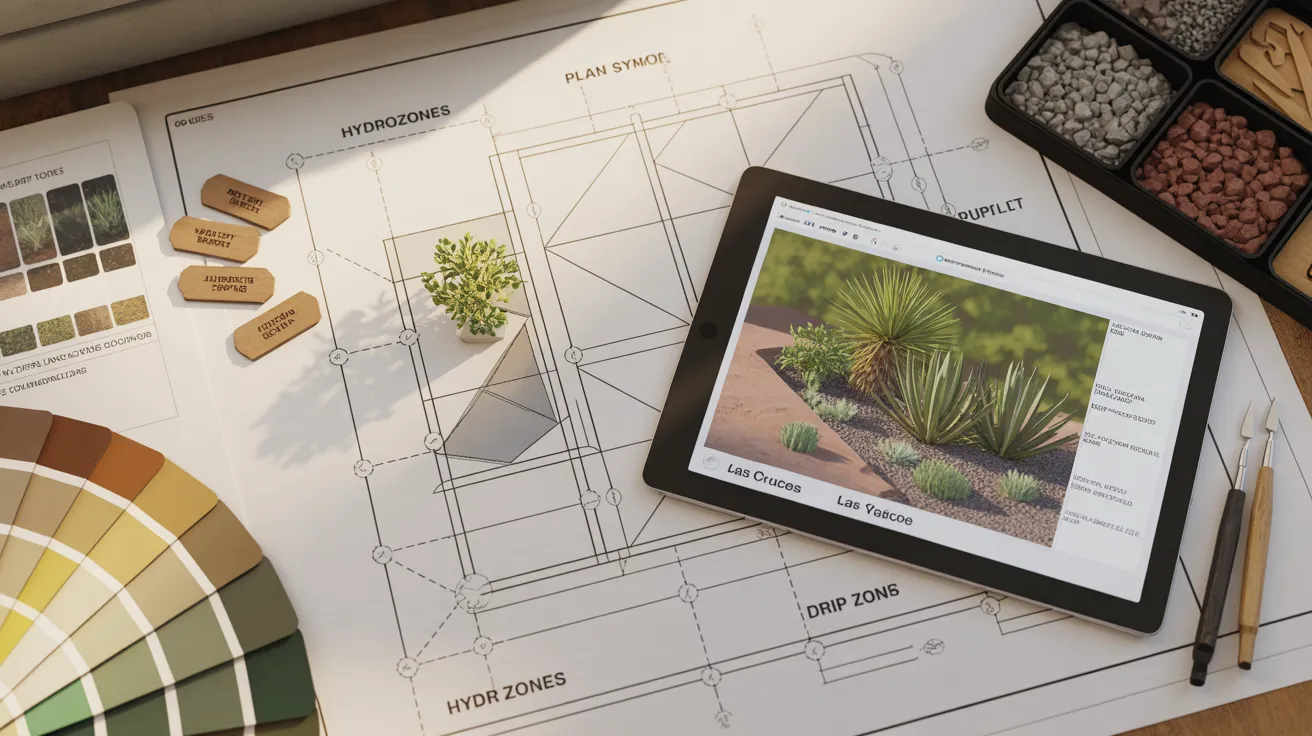
With a vetted pro in place, you can specify smart desert landscaping that meets New Mexico’s water constraints and performance standards. You’ll start with xeriscape principles: hydrozone planting, efficient irrigation, and soil amendments validated by infiltration tests. Select native grasses, flowering perennials, and drought tolerant succulents matched to USDA Zone 8 and evapotranspiration rates. Install drip irrigation with pressure-regulated emitters, backflow prevention, and smart controllers that adjust to local ET data.
Utilize permeable paving-open graded gravel, stabilized decomposed granite, or permeable pavers-to meet stormwater infiltration targets and decrease runoff. Indicate mulch depths of 2-3 inches to suppress evaporation and weeds. Grade for passive water harvesting with swales and basins that collect roof and hardscape flows. Validate performance with audit-ready water budgets and seasonal irrigation scheduling.
Credentials That Matter: Licenses, Insurance, Warranties, and Reviews
Before signing a contract, validate key credentials that safeguard your project and wallet: a New Mexico GB-98 or GS-29 contractor license in good standing (validate with NMRLD), city of Las Cruces business registration, and general liability and workers' comp insurance with COIs listing you as certificate holder and matching policy limits. Check expiration dates and insurer A.M. Best ratings. Choose licensed contractors who comply with OSHA safety practices and ANSI standards for tree work.
Assess warranty terms in writing: materials (manufacturer vs. contractor), workmanship duration (commonly 1-2 years), exclusions (freezing, misuse), transferability, and claim procedures. Insist on punch-list remedies specified by response times. Examine supplier references and recent permit history to verify scope capability. Examine reviews across Google, BBB, and CSLB-style complaint databases; focus on pattern consistency, photo-documented results, and verified project addresses.
Upfront Cost Assessments, Time Frames, and Correspondence
Though price counts, you should require scope clarity and schedule accountability in writing. Insist on clear pricing that itemizes labor, materials, disposal, contingencies, and taxes. Insist on a baseline schedule with defined project milestones, dependencies, and critical path, plus start/finish windows that incorporate local permitting and supply lead times in Las Cruces. Ask for change-order protocols that specify triggers, approval steps, and cost/time impacts before work commences.
Establish communication standards: regular updates (for example, two times per week) summarizing progress against milestones, risks, and next steps. Define response times for inquiries and on-site issues, including four business hours during workdays and twenty-four hours for non-urgent emails. Verify that the contractor documents weather delays, inspection results, and punch-list completion, and that they deliver a final closeout packet with warranties, as-builts, and maintenance guidance.
Selecting and Comparing Regional Teams for Your Financial Plan and Targets
Clear scopes and communication protocols only work if you hire the right crew, so evaluate Las Cruces landscaping teams against established criteria linked to your budget and outcomes. Begin with apples-to-apples price comparisons: request itemized bids that separate labor, materials, equipment, disposal, and contingencies. Verify New Mexico contractor licensing, bond status, and general liability/worker's comp certificates. Confirm ISA-certified arborists for tree work and WaterSense knowledge for irrigation.
Assess evidence of performance: recent photos with addresses, references, and measurable metrics (water-use reductions, schedule adherence). Match service capacity with project prioritization-inquire about how they phase tasks to meet a fixed budget without scope creep. Request a written QA plan, warranty terms, and maintenance handoff. Rank vendors on cost, compliance, methodology, responsiveness, and documented results.
Your Questions Answered
Do You Offer Maintenance Training for Homeowners After Project Completion?
Yes, you get maintenance training following project completion. We provide on-site tool demonstrations, calibrate irrigation, and deliver custom watering schedules according to soil infiltration rates and plant evapotranspiration. You will learn pruning intervals, mulch depth standards, and fertilizer timing following local extension guidelines. We supply a maintenance checklist, warranty thresholds, and safety protocols. You can arrange for a follow-up audit to verify adherence and adjust practices using performance indicators including canopy vigor and runoff reduction.
Is Integration of Pollinator Habitats or Wildlife-Friendly Features Possible?
Yes. You can integrate native blooms into layered planting zones that create bee corridors, nectar succession, and seasonal shelter. You'll designate region-appropriate species, exclude hybrids with sterile pollen, and comply with Integrated Pest Management standards-no neonicotinoids. You'll include water sources with shallow landings, brush piles, and snag perches, conforming to Xerces Society guidelines and ASLA best practices. You'll confirm outcomes via transect counts, bloom phenology logs, and soil-organic-matter benchmarks.
What Seasonal Allergies Might Local Plant Choices Trigger?
You're likely to react to elm, mulberry, and juniper, which generate allergenic pollen; spring Pollen peaks occur with elm/mulberry, while juniper peaks late winter. Grasses (Bermuda and rye) spike in late spring. Ragweed drives late-summer symptoms. Xeric ornamentals like sagebrush can aggravate sensitive airways. Mold growth escalates after irrigation during monsoons or leaf litter buildup. Select low-allergen cultivars, female (fruiting) trees, and drip irrigation; follow ASTM E1971 air quality monitoring and EPA guidance for allergen mitigation.
Do You Offer After-Hours or Storm-Response Emergency Services?
Yes. Clients can access after-hours and storm-response emergency services. We run 24/7 emergency dispatch, triage calls per safety and damage severity, and send out ISA-certified crews. We conduct storm cleanup, hazard tree assessment, limb removal, debris hauling, and temporary erosion control according to ANSI A300 and Z133 standards. Our teams show up with PPE, chainsaws, chippers, and lighting. We record conditions, photograph damage, and furnish post-event remediation plans following best management practices.
How Do You Manage Pet-Safe Material and Plant Selections?
You receive a pet-safety plan built into plant/material specs. We evaluate species against ASPCA toxicity lists, select non-toxic mulch (untreated cedar or cocoa-free options), and specify pet friendly groundcovers like clover or dwarf mondo grass. We exclude sago palm, oleander, and cocoa mulch. We document selections in a submittal log, label zones, and install barriers during curing. We update you on maintenance, ingestion risks, and ASTM F1951 accessibility where applicable.
To Conclude
You're prepared to make a confident hiring decision. Search for xeriscape expertise, native-plant mastery, and water-wise design that meets local codes, then verify licensing, insurance coverage, warranties, and independent reviews. Insist on written scopes, line-item estimates, clear timelines, and a single point of contact. Compare at least three Las Cruces teams on qualifications, references, and upkeep programs-not just price. Once standards align and documentation is verified, you won't be rolling the dice—you'll be establishing a sure thing.